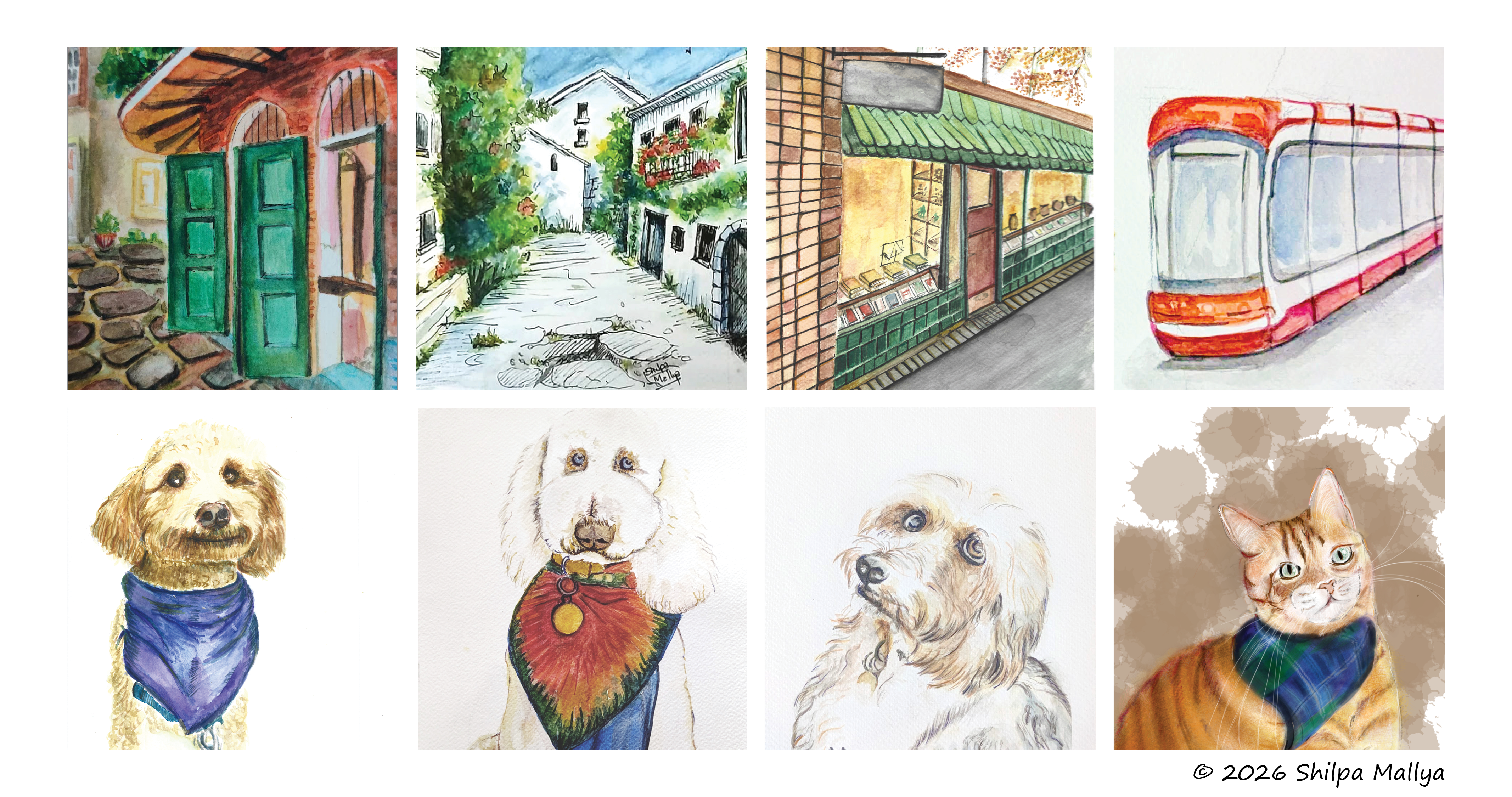
I’ve made most of my Toronto friends at the dog park. Some of them are dogs, having ended up as subjects of my paintings.
Here, everything feels new yet old. I utilized my first summer going for different walking tours, exploring museums, the city and the waterfront, painting everything as I went along. I documented everything as I went, for I know in a few years, I may not look at these places the same way I did the first time I was here. I try to capture the essence of Toronto, especially observing it as a newcomer and understanding how the city functions, how seasons change, people, pets, and wildlife moving every so often.
Architecture found me before I could form drawings. My father was an architect, one of the first in Calicut, Kerala, my mom was an engineer turned artist. Much of my dad’s work is now a landmark somewhere in that town. Design was the direction I picked up naturally. I grew up building blocks, placing Lego on Lego. Design is a well-fitted puzzle where shapes intersect spaces, and lives interact with the non- living. As much as I feel alive walking through the sound garden and glance upon the small sights of the community, whether it’s people singing & jamming together or having a drink, walking their dog, or resting looking at the view. That’s what I see when I look at a space, a million stories to weave.I studied architecture and eventually moved to the city of Bangalore. Here I worked in a few firms and almost by accident moved into teaching. Four years flew by leading design studios, outreach initiatives, thesis, etc.
In 2015, my father had a small health setback, and art became my coping. Doodling, sketching, anything that gave me a purpose. I would admit, personally, seeing how ill health had affected a fellow architect was eye-opening in my journey. In 2017, when I purchased my first watercolour sketchbook, I felt it was like my new superpower. Sometimes I felt too overwhelmed and also put myself under a lot of pressure. I had often been nervous, thinking whether I would waste paper, would I be able to learn, is it any good, am I making an embarrassment of myself and so on. 4-5 paintings in , I soon started looking ahead and ventured into it head on. During the Christmas break of 2017, I lived at my desk. I would put a European history documentary on my laptop and start painting in my small watercolour pad. Guess what I painted? A lot of European windows & doors! Architectural elements were the first points of interest. Once I started painting, I just couldn’t stop. I kept experimenting with colours, with brush techniques, picking braver subjects such as streets. Watercolour taught me freedom, quite like childish glee. I picked it up fast and often drowned my free time with this. This didn’t go unnoticed, as I was selected to teach design foundation.
This art exploration landed me the role as an Art Foundation studio professor for 3 years and further cemented my place as a full-time studio professor/lecturer with other technical subjects. I further used this opportunity to explore ways to incorporate art, history, film into my ways of teaching design. Architects/ Designers are multi-faceted, often having a side quest in something creative alongside their main professional duties. Being open to new things has helped me to keep experimenting with software, style, methods of learning & teaching design. Those 4 years
pushed me to question how design is taught, helping students secure co-ops, finding ways to collaborate with various partners such as local design firms, design festivals, international organizations like Gensler, etc. I served as an educator, facilitator, manager, and coordinator and eventually became the head of the Interior Design department at JD Institute
In 2020, my father passed away and this became my wakeup call. A shared dream of my master’s at CEPT University. I channelled all my grief into preparing for my master’s, saving up, reading, learning and preparing while I worked as the department head. I had 10 days to transition from an educator to a full-time student.
CEPT University was by far the most challenging time of my professional life, and most CEPT alumni would say the same. The workshops, the submissions, the late nights, the library hours. I was reborn there: someone far more detail-oriented, learning to do research, and hopefully a better designer. I advanced across design thinking (especially facilitation), systems thinking and prefabrication. I also got the chance to work on a life-size design for disassembly project, constructing the fully functional unit in 8 weeks.
By then, my move to Canada was already in process.
As any immigrant, our circles are small; our lives almost seem like two different versions. Version 1 in the home country, Version 2 in Canada. They are drastically different. The way we walk on streets, cross roads, drive, take public transit, women’s safety, everything is much different than what it is, but at the same time, it is comforting and now feels more homely. As welcoming as the city is, it also feels like we’re in little silos.

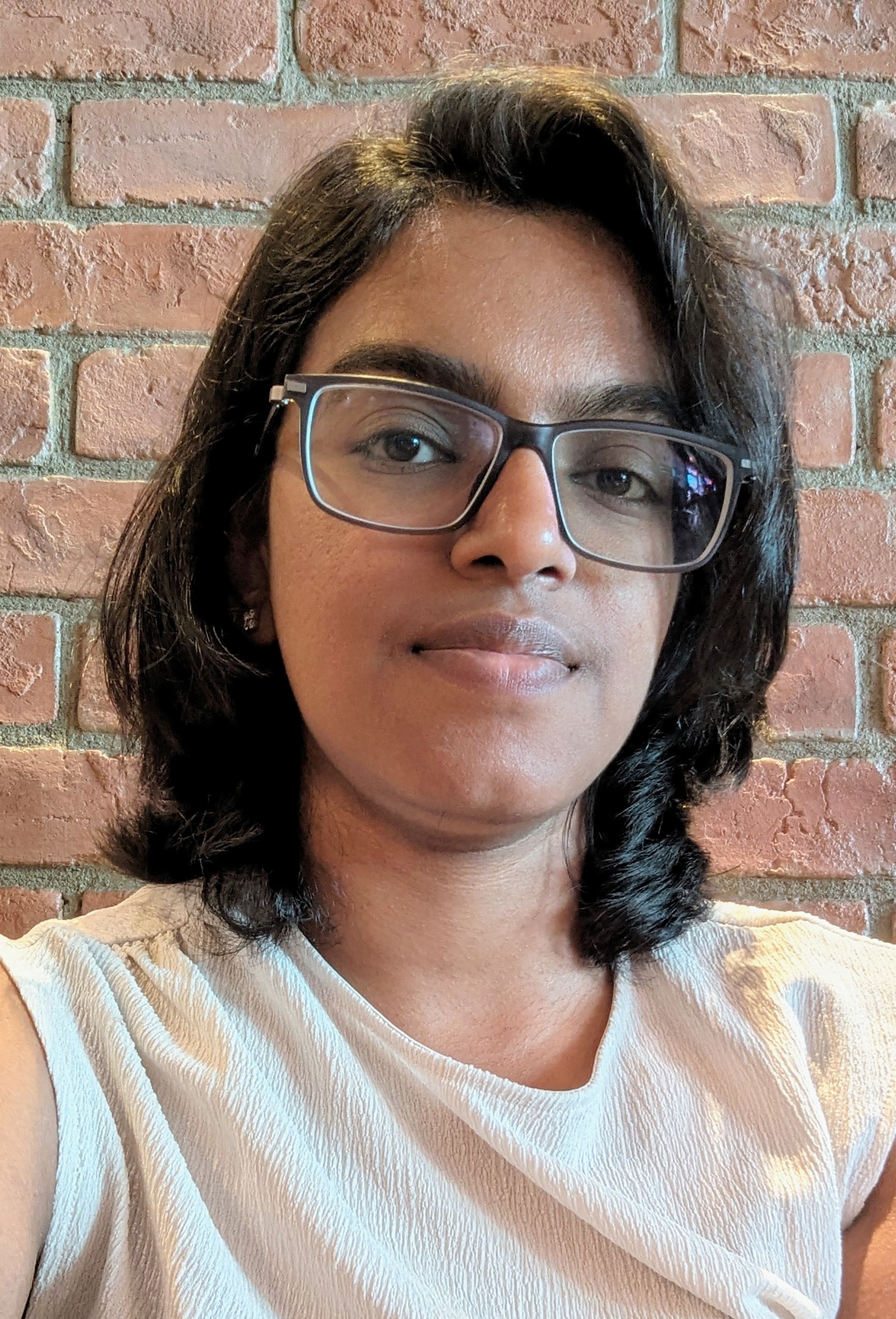
Shilpa Mallya.
Shilpa is an architectural & interior designer and educator with a master’s in architectural product design from CEPT University. Her work bridges architecture, product systems, and interior design. She has taught design, history, art, and interior design, leading design thinking workshops that inspire students to explore ideas through collaboration and visual storytelling. With a background in building systems, research-driven design, and architectural practice, she combines technical expertise with a deeply human-centred approach to design. Outside of work, she enjoys creative, investigative, and explanatory storytelling, playing the guitar, watercolour painting, and exploring cities on heritage walks.